
Jason Allen
-
Make managing your music library easier with PlayIt Live’s tagging system. Instead of manually updating lists, simply tag each track and let Filtered Track Groups organise everything for you. Enjoy quicker updates, less admin, and a more flexible scheduling workflow. Start tagging today and simplify your music programming.
-
With PlayIt Live’s track dayparting, you can control exactly when each track is played, ensuring the right music, promos, or announcements air at the perfect time. Keep your output fresh, relevant, and suitable for your audience, hour by hour. Try track dayparting today and elevate your station’s programming.
-
This ambiguity becomes a significant liability in broadcast software, where timing precision directly impacts the user experience. Consider these common scenarios that plague DateTime-based systems: Many .NET developers have encountered the DateTime dilemma: you have a timestamp, but what does it actually represent? The class offers three Kind values: Local, UTC, and Unspecified, yet this…
-
Voice tracking is a production technique that allows radio presenters to pre-record their voice segments while automation software handles music placement. This reduces studio time significantly – creating a three-hour show in just 30 minutes – while maintaining professional sound quality indistinguishable from live broadcasting.
-
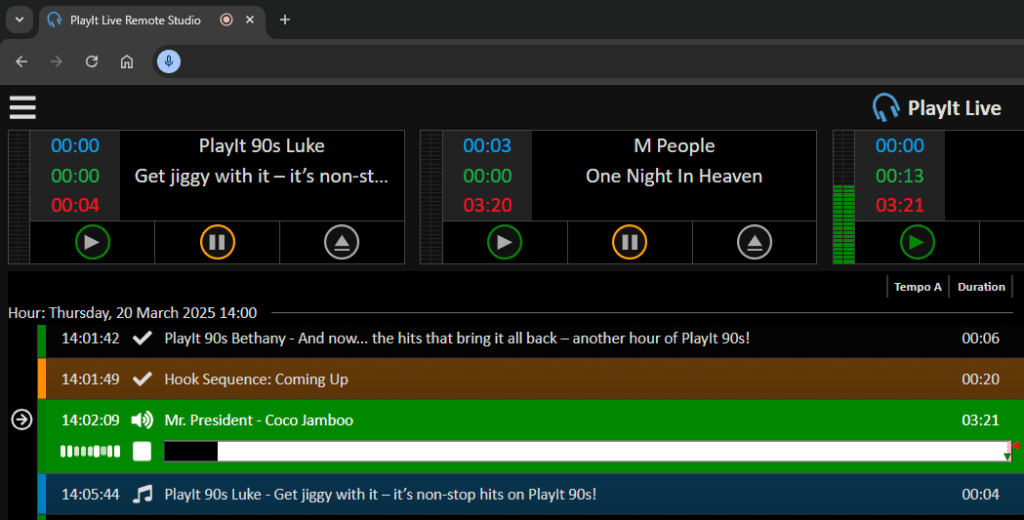
Remote Studio is a web-based solution that enables radio presenters to broadcast remotely, ensuring high-quality audio without geographical limitations. It supports multiple presenters through a straightforward connection process, offers low-latency communication, and integrates with PlayIt Live. The platform simplifies remote broadcasting’s technical challenges, making it accessible for radio stations of any size.
-
Priority Streams simplify remote broadcasting for Internet radio stations by providing continuous connection monitoring, minimizing issues like failed connections and buffering. It features two connection options and three operational states to ensure seamless transitions between live audio and automation. This approach reduces manual intervention and enhances the overall broadcasting experience.
-
Music scheduling is crucial for radio stations, yet challenging. Smart Selection offers a new method that balances fairness and unpredictability, ensuring less played tracks are prioritised. This system avoids issues of random clustering present in traditional methods and allows for flexible scheduling, making playlists engaging and varied for listeners.

 The Heart of Radio Tech